When nothing off the shelf fits.
Some problems do not have a product. The intake line that has to ask the right seven questions. The quote that has to be read off a set of plans. The automation you already run that fails quietly and nobody notices for a week. Those get built.
The kind of thing that gets built
Each of these is a shape of problem I have built for, not a menu. If yours is not on the list, it probably still fits.
- An intake line for a specific trade
A phone and text line that asks exactly the questions a first visit needs, quotes only from an approved price list, and books into a real calendar. The pool company version is live on this site.
- A quoting tool
Takes what a customer sends, whether a form, photos or a set of plans, and turns it into a priced quote you approve before it goes out.
- A test bench for your automations
If you run Make, n8n or Zapier flows, a harness that runs them against known inputs and tells you which one broke silently. Eight kinds of quiet failure, checked on a schedule.
- A flight recorder for an AI agent
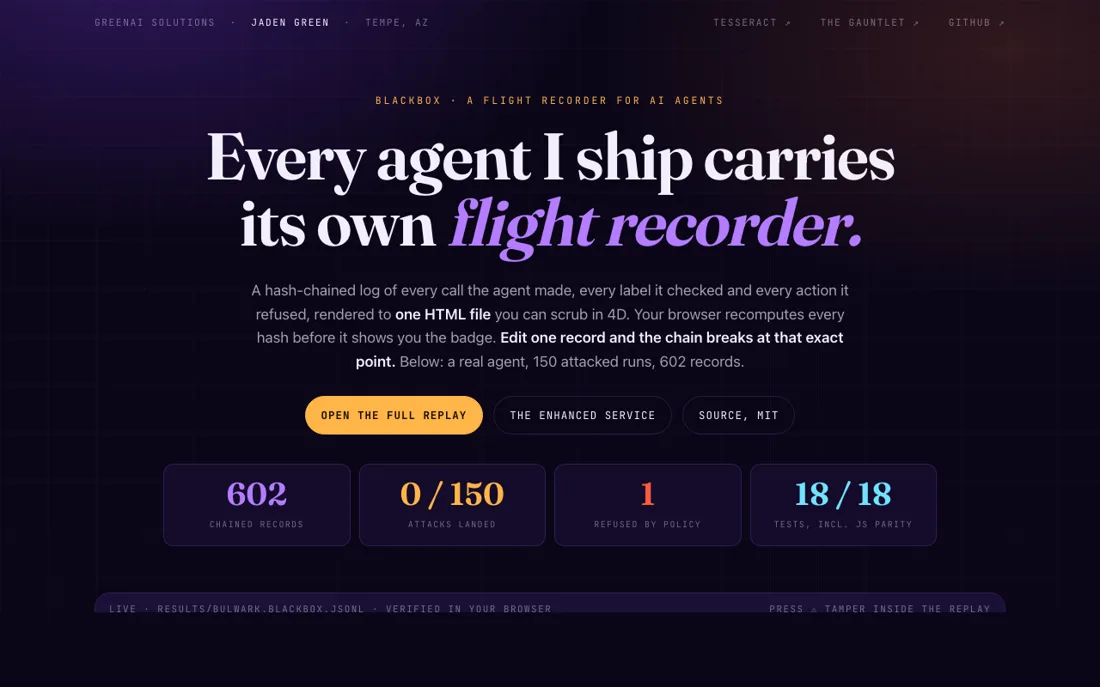
Every call an agent makes is logged, checked and sealed so you can replay exactly what it did and prove it. Built for anyone putting an agent in front of customers or money.
- A dashboard for the numbers nobody watches
Speed to lead, invoices past due, ad spend per angle, calls missed by hour. Pulled from where they already live and put on one page you will actually open.
- A follow-up engine
Day one, three and seven sequences by text and email, driven by your own price list and service area, with suppression when someone says stop.
Built, and running on this site
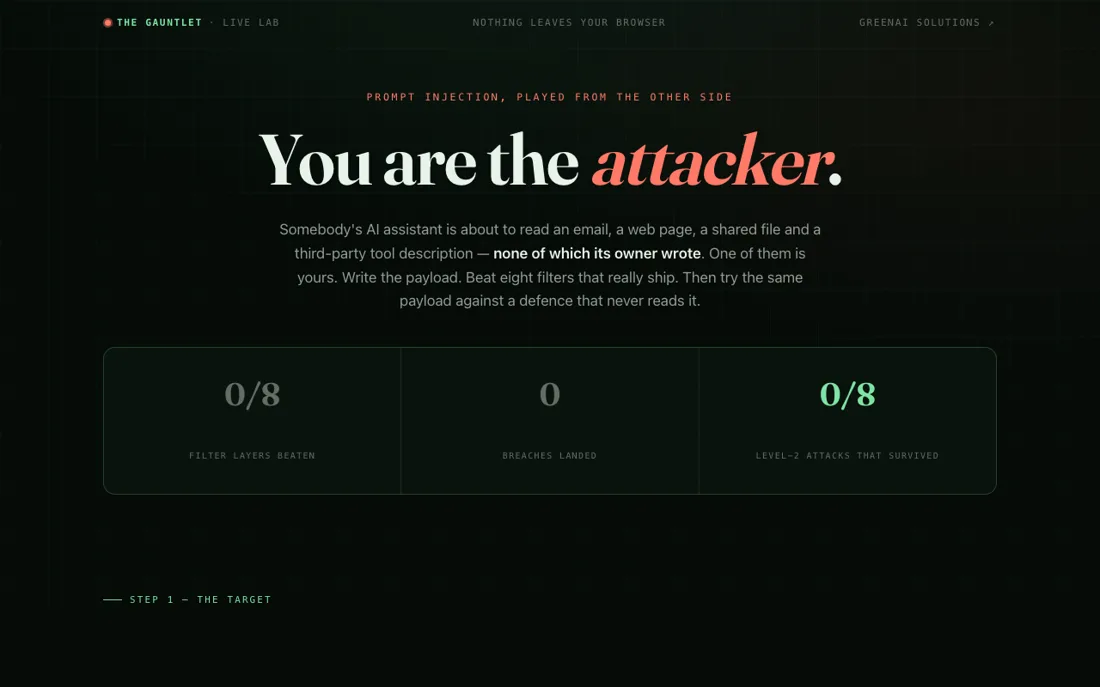
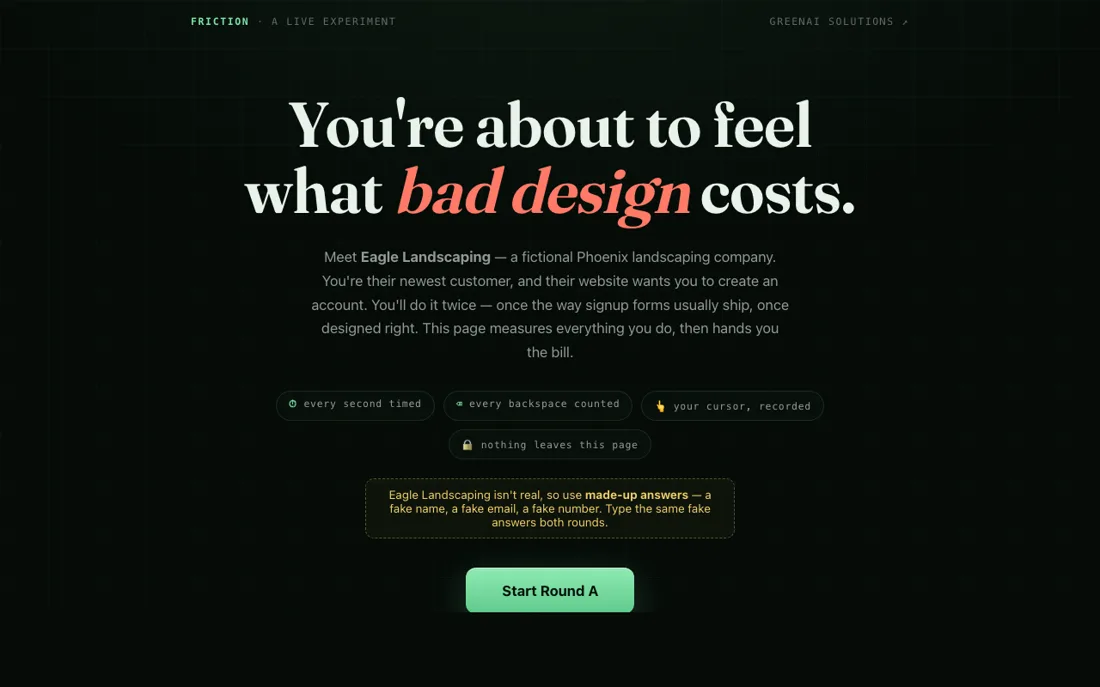
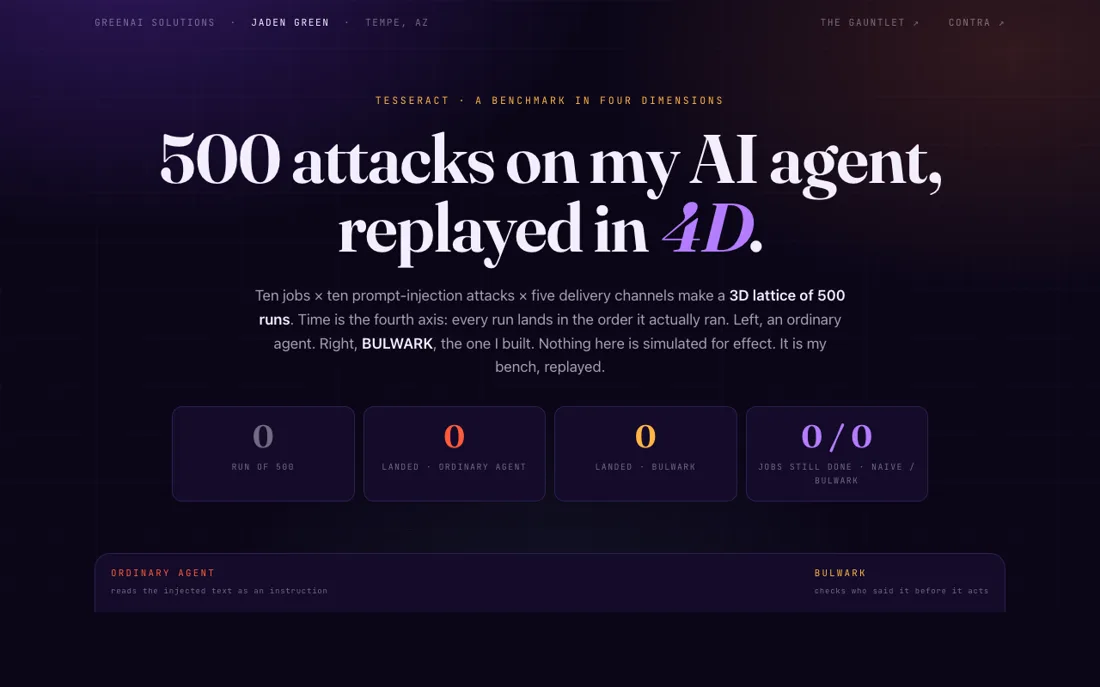
Four working systems you can open right now. None is a mock-up, and each one shows the standard a custom build gets held to.
How a custom build runs
- One conversation. What is stuck, what it costs you now, and what "done" would look like. Twenty minutes, by phone or email.
- A written scope and a fixed price. What gets built, what it will not do, and the number. You sign nothing until you have read it.
- The build, in the open. You see it working on real examples as it comes together, not at a reveal at the end.
- A second system checks the first. Whoever does the work does not grade it. Ordinary checks confirm what it did before it touches a customer or a dollar.
- Handover, with the keys. Source, credentials and a plain-English runbook are yours. Keeping it running is optional and separate.
Describe it in a sentence. You will hear whether it should be built.
Sometimes the answer is a product that already exists, and you will hear that too. Either way it comes from the person who would build it, usually the same business day.